
OOIDA Warns of Data Bias in FMCSA Safety Inquiry: Is Your Safety Rating at Risk?

The backbone of the American economy is the individual truck driver. However, a new storm is brewing in Washington D.C. that could fundamentally change how your “safety” is measured on the road. The Owner-Operator Independent Drivers Association (OOIDA) has officially issued a warning regarding data bias in the Federal Motor Carrier Safety Administration’s (FMCSA) latest safety inquiry.

For the thousands of owner-operators and company drivers across the U.S., this isn’t just bureaucratic red tape—it’s a direct threat to your livelihood. If the data used to judge you is flawed, your safety rating, insurance premiums, and ability to stay on the road are all on the line.

The Core of the Conflict: What is the FMCSA Inquiry?

In early 2026, the FMCSA launched a high-stakes inquiry into Safety Fitness Determinations (SFD) and crash-causation factors. The goal sounds noble: to use “data-driven” models to identify at-risk carriers before crashes happen.

However, OOIDA argues that the “data” being driven is steering the industry off a cliff. The association claims that the FMCSA’s reliance on specific types of research—specifically telematics and unverified crash data—creates a skewed picture that unfairly penalizes small-business truckers.

Why OOIDA is Sounding the Alarm on Data Bias

The primary concern cited by OOIDA is the lack of a “control group” in the FMCSA’s research. In any scientific study, you need a baseline to compare against. OOIDA contends that by focusing almost exclusively on carriers that already use high-end telematics and ELD-integrated safety software, the FMCSA is ignoring the millions of safe miles driven by independent operators who don’t use those specific proprietary systems.

Key points of the data bias warning include:

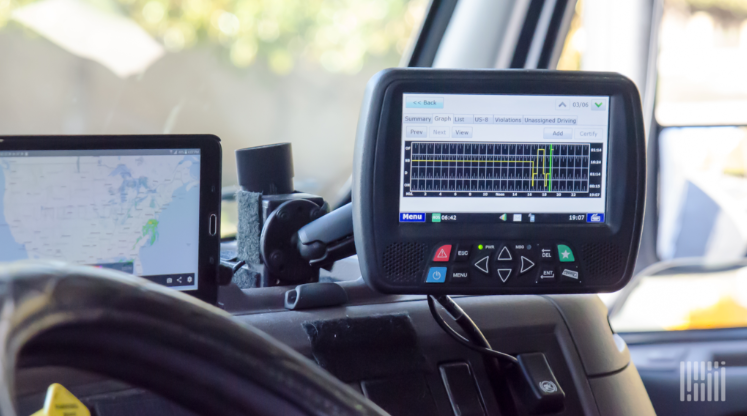
  • Telematics Over-Reliance: The FMCSA is leaning heavily on data from “black boxes” and driver-monitoring systems. OOIDA argues this data often lacks context, such as a driver swerving to avoid a reckless four-wheeler.
  • The “Garbage In, Garbage Out” Problem: Flawed roadside inspection data is being fed into new AI-driven models. If the initial inspection was biased or incorrect, the resulting safety score is a lie.
  • Lack of Small-Fleet Representation: The inquiry focuses on data sets more easily obtained from mega-carriers, leaving the unique operational realities of owner-operators in the dark.

The Impact on the Individual Truck Driver

You might wonder, “How does a ‘data inquiry’ in D.C. affect my cab in Nebraska?” The answer lies in your CSA (Compliance, Safety, Accountability) scores. The FMCSA’s current path suggests a shift toward a “continuous monitoring” safety rating. If the inquiry’s biased data becomes the foundation for new rules, you could see:

  1. Higher Insurance Rates: Insurance companies pull directly from FMCSA data. Biased safety ratings lead to skyrocketing premiums.
  2. Unfair Roadside Targeting: If biased data flags certain types of operations as “high risk,” you’ll find yourself pulled behind the scale more often, regardless of your actual driving record.
  3. The “Guilty Until Proven Innocent” System: OOIDA has long fought the DataQs system, which is notoriously difficult for drivers to use to challenge incorrect violations. Biased inquiries only make this system harder to navigate.

The Reality of “Safety” vs. “Compliance”

One of the most powerful arguments made by OOIDA is the distinction between being compliant and being safe.

“A driver can be 100% compliant with every paperwork regulation and still be an unsafe operator. Conversely, a safe driver can be penalized for a clerical error that has zero impact on highway safety.”

The FMCSA’s inquiry risks doubling down on “paperwork safety” because that is the easiest data to track. This ignores the real-world experience and professional judgment that veteran truckers bring to the highway every day.


Comparison: Who Controls the Data?

Data SourceFMCSA ViewOOIDA/Trucker View
ELD RecordsObjective proof of fatigue management.High-pressure “race against the clock.”
Telematics/CamerasReal-time safety monitoring.Invasion of privacy & out-of-context data.
Roadside InspectionsReliable safety snapshots.Subjective and often inconsistent by state.
Crash DataClear indicator of risk.Often fails to account for “non-preventable” incidents.

What Can You Do?

The FMCSA is currently in a phase of seeking public comment and data. This is where the voice of the American trucker matters most.

  • Stay Informed: Follow Land Line Media and OOIDA updates. Knowledge is your first line of defense.
  • Document Everything: If you have a clean inspection, keep the paperwork. If you have a “non-preventable” crash, gather every shred of evidence to fight the data entry.
  • Support the Fight: OOIDA’s strength comes from its membership. They are the only major group in D.C. specifically fighting for the rights of the small-business trucker against these data-driven mandates.

The Road Ahead in 2026

As the FMCSA moves forward with its 2026 regulatory calendar—including the rollout of the “Motus” registration system and new Safety Fitness Determinations—the battle over data will intensify.

The industry is at a crossroads. We can either have a safety system based on real-world outcomes and professional experience, or one based on biased algorithms that favor big-box carriers with deep pockets. OOIDA has made its stance clear: biased data is not safety. It’s time for the FMCSA to listen to the people who actually move the freight.

Leave a Comment

Your email address will not be published. Required fields are marked *

Scroll to Top