
A High-Stakes Finale: The 2025 Christmas Logistics Challenge
The final months of the year represent the ultimate stress test for the entire logistics industry. For Amazon, the Christmas rush isn’t just about record-breaking sales; it’s a monumental exercise in supply chain mastery. As we enter the final peak of 2025, the USA trucking market is the critical artery that determines success or failure.
Amazon’s strategic blueprint for this period is no longer a passive reaction to market conditions. It’s an aggressive, tech-driven effort to control its destiny, expand market share, and ensure packages move faster and more reliably than the competition. Understanding this blueprint is essential for every carrier, shipper, and logistics professional operating in the American freight space.
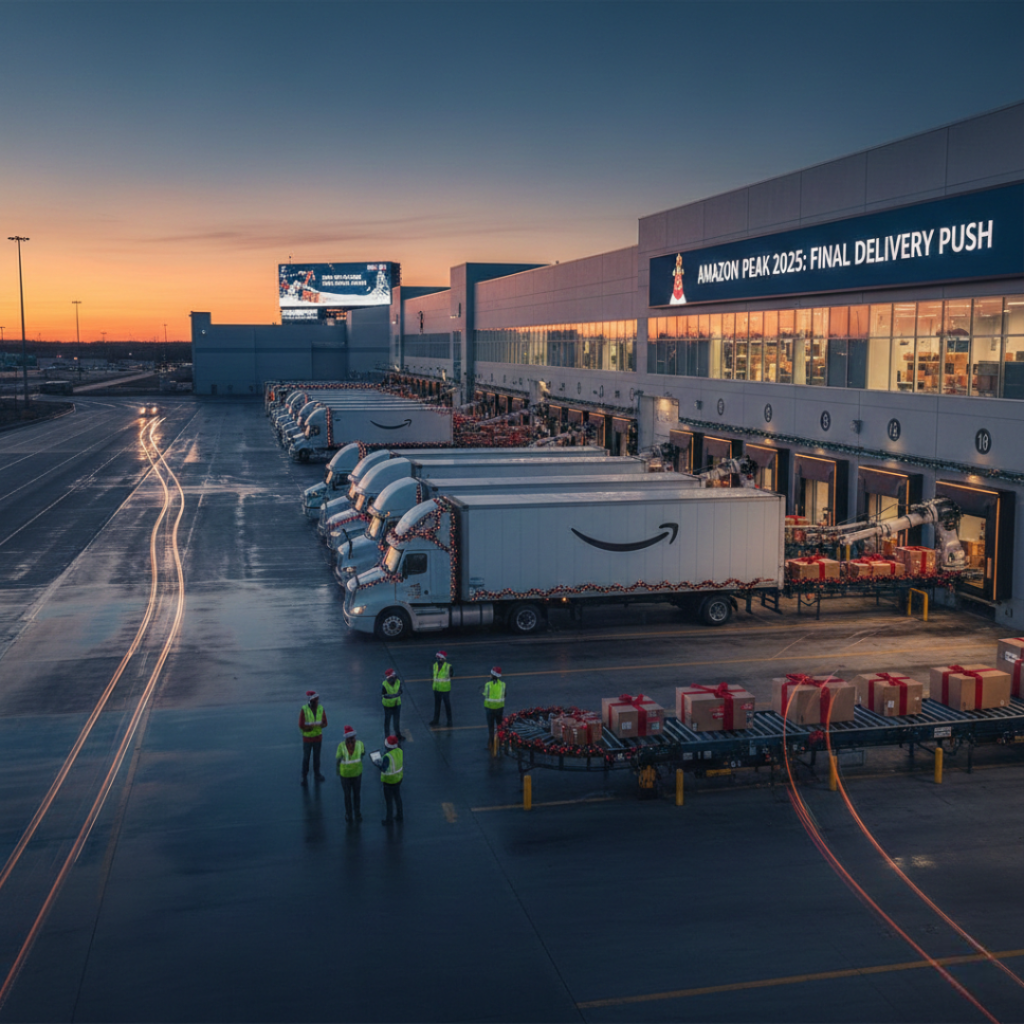
What Defines Amazon’s “Peak Season” in 2025?
While the entire fourth quarter is critical, the official Amazon Peak Season for 2025 runs from mid-October through early January 2026. This period captures:
- October: Early holiday prep and the start of elevated fulfillment fees.
- November: Black Friday/Cyber Monday (BFCM) sales, the year’s highest-volume shopping days.
- December: The frantic final push for Christmas delivery, with the cut-off for pre-Christmas pickups around December 18th.
- January: The inevitable surge in post-holiday returns and clearance sales.
Amazon’s Strategic Maneuvers in the 2025 Trucking Landscape
Amazon’s approach to the 2025 USA trucking market is defined by three pillars: massive in-house expansion, leveraging advanced technology, and strategic service diversification.
Doubling Down on In-House Capacity: Amazon Freight’s Evolution
Amazon Freight is transforming from a simple marketplace shipper into a full-spectrum logistics force. Its deep pockets and sheer volume allow it to challenge traditional carriers head-on.
- LTL Service Launch: Amazon Freight rolled out Less-Than-Truckload (LTL) services across the U.S. in 2025, specifically targeting shippers with smaller loads moving into Amazon Fulfillment Centers (FCs). This move undercuts traditional LTL pricing and gives Amazon greater control over inbound inventory flow, a critical component for its Christmas shipping strategy.
- Intermodal Expansion: Amazon is increasingly utilizing rail combined with road (intermodal) to handle long-haul shipments. This not only cuts costs but also aligns with sustainability goals by reducing per-shipment emissions by utilizing rail over long-haul road transport.
Technology and AI at the Core of Trucking Operations
Amazon is deploying a sophisticated “digital first” strategy to optimize every mile during the peak season 2025.
- AI-Powered Routing: Advanced machine learning predicts port congestion and optimizes container and truck loads, minimizing empty miles and maximizing utilization—a key cost-saving measure.
- Smart Trailer Technology: Utilizing high-tech sensors on trailers to monitor components and cargo capacity in real-time. This enhances security against cargo theft (a rising challenge in 2025) and ensures trailer space is fully utilized.
- Predictive Visibility: Shippers using Amazon Freight receive predictive Estimated Times of Arrival (ETAs) and real-time alerts, setting a new, higher standard for supply chain transparency that competitors must now match.
The Strategic Expansion of LTL Services
The introduction of dedicated LTL services means Amazon is actively trying to mitigate inbound bottlenecks at its FCs. By offering transparent digital quoting, real-time tracking, and bundled services, Amazon is making it easier for its sellers to comply with crucial FBA deadlines.
Pro Tip for Shippers: Early inbound inventory planning is non-negotiable for the 2025 peak. Amazon’s internal deadlines for Christmas inventory arrival—often as early as December 1st—should be treated as firm cut-offs to avoid stockouts and last-minute expedited freight costs.
The Broader USA Trucking Market Challenges (Beyond Amazon)
While Amazon innovates, the USA trucking market faces systemic issues that intensify during the Christmas peak. These are the headwinds that all logistics players must navigate:

Driver Shortages and Capacity Crunch Risks
Despite a temporary freight recession (more trucks than loads earlier in 2025), a persistent driver shortage of over 80,000 drivers remains a significant structural risk. When holiday volumes surge:
- Capacity Tightens: Many drivers take extended time off for the holidays, shrinking the available pool of trucks precisely when demand is highest.
- Labor Costs Rise: Carriers must boost wages and bonuses to retain drivers, leading to higher operational costs that are inevitably passed on to shippers via surcharges.
Volatile Freight Rates and Carrier Instability
The market balance is fragile. While contract rates offer stability, the spot market can become volatile during surges.
- Rate Spikes: Last-minute shipments close to Christmas are subject to dramatic rate spikes.
- Carrier Instability: Bankruptcies and mergers among smaller carriers have reduced options, making reliance on a diversified carrier network more important than ever to secure sufficient capacity.
A Blueprint for Shippers and Carriers: Peak Season Best Practices
Success in the 2025 Christmas logistics landscape depends on foresight and agility.
Tips for Amazon Sellers and Shippers
- Forecast with Precision: Go beyond last year’s sales. Use real-time data from promotions, paid media, and marketplace velocity in October/November to forecast demand for December.
- Utilize Diversified Fulfillment: Use FBA (Fulfillment by Amazon) for fast-moving, high-volume SKUs, but have a robust backup with FBM (Fulfillment by Merchant) or a third-party logistics (3PL) partner to maintain flexibility and buffer against capacity constraints.
- Audit Your Inbound Process: For shipments using Amazon Freight or any carrier, ensure the Bill of Lading (BOL) is 100% accurate, and provide precise operating hours (including night/weekend availability) for pickups and deliveries to avoid costly delays.
Strategies for Trucking Carriers and 3PLs
- Lock in Volume: Secure contract agreements early in the fall to guarantee stable rates and capacity through the end of the year.
- Prioritize Digital Transformation: Shippers now expect Amazon-level user experience (UX). Implement API-driven quoting, real-time visibility portals, and predictive ETAs to remain competitive.
- Focus on Driver Retention: Offer competitive wages and operational support (like the hands-free tech and AI assistance Amazon is testing) to retain drivers during the peak rush when they are most needed.
FAQs: Amazon Peak Season Logistics 2025
Q1: When is the official Amazon Peak Season for 2025?
A: The Amazon Peak Season 2025 is generally considered to run from mid-October through early January 2026, encompassing major events like Black Friday, Cyber Monday, Christmas, and the post-holiday returns period.
Q2: What are the key inbound deadlines for Christmas inventory?
A: While specific dates vary, Amazon typically advises sellers to have inventory arriving at their fulfillment centers by December 1st, 2025, to ensure it is processed and available for Christmas shipping. The pickup cut-off for shippers using Amazon services to guarantee delivery by Christmas Day is often around December 18th.
Q3: Did Amazon raise its peak season surcharges in 2025?
A: Amazon has applied peak season surcharges on its fulfillment services, typically from October 15th through mid-January. For 2025, the rates for FBA fees have generally matched the previous year’s elevated rates, unlike some other carriers that have raised theirs further. Shippers must budget for surcharges on services like Additional Handling and Large Packages during this time.
Q4: How is Amazon using technology to manage trucking capacity?
A: Amazon uses AI and machine learning for real-time capacity forecasting and route optimization. This includes leveraging smart trailer technology for better utilization and implementing predictive insights to proactively manage disruptions, keeping the USA trucking market flowing as smoothly as possible.
The Road Ahead: Conclusion
Amazon’s 2025 Christmas Blueprint confirms a shift in the USA trucking market. The company is no longer just a large customer of logistics services; it is a logistics disruptor that is setting new industry standards for speed, visibility, and control. By expanding Amazon Freight’s in-house capabilities, especially with the strategic launch of LTL services, and by embedding AI into every stage of the process, Amazon is building a highly resilient network designed to handle the final peak of 2025 and beyond. For shippers and carriers alike, the lesson is clear: adapt to Amazon’s tech-driven expectations, plan inventory earlier than ever, and secure your capacity now. Proactive planning is the only reliable way to ensure a profitable holiday season.