
For a long-haul trucker, the words “Dallas” and “Ice Storm” are a recipe for a logistical nightmare. As we move into late January 2026, the National Weather Service is sounding the alarm: a “potentially catastrophic” winter system is targeting the North Texas corridor.
Dallas isn’t Chicago or Denver. The city doesn’t “do” snow; it does ice. When an Arctic blast hits the humid Gulf moisture, the result is a sheet of glass over some of the busiest freight lanes in the United States.
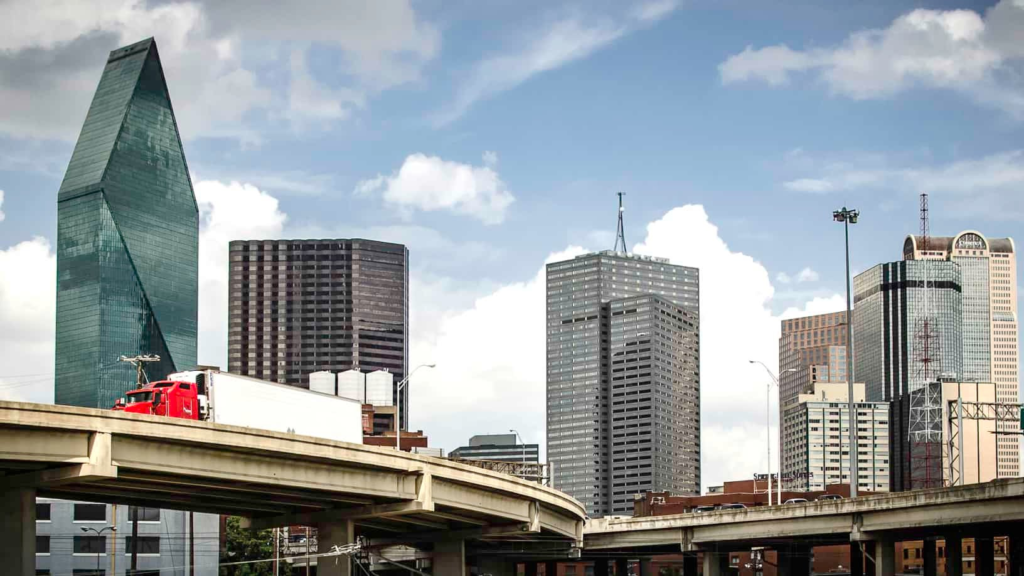
If you are scheduled to haul through the DFW Metroplex this week, here is exactly what you need to expect and how to protect your rig, your load, and your life.
1. The “Ice Skink”: Why Dallas Roads Paralyze
Unlike Northern states that have massive fleets of salt trucks, Texas relies heavily on brine (a salt-water mix) and a limited number of sanders.
- Bridges and Overpasses: In Dallas, these are the “first responders” to freezing rain. Because they are exposed to air on all sides, they freeze much faster than the ground. For an 80,000-pound semi-truck, a bridge on I-35 or I-635 can become an inescapable slide in seconds.
- Black Ice: This is the silent killer on the I-20 corridor. It looks like a simple wet spot or a dark patch of asphalt. By the time you realize it’s ice, your trailer is already trying to overtake your cab.
2. Logistics Gridlock: The DFW Hub Shuts Down
Dallas is the fourth-largest metropolitan area in the U.S. and a critical node for American Airlines (DFW Airport) and FedEx (Memphis-Dallas link).
When the ice hits:
- Warehouse Delays: Forklift operators and warehouse staff can’t get to work. Expect “Gate Closed” signs at major distribution centers in Wilmer, Coppell, and Fort Worth.
- Load Cancellations: Outbound shipment rejections in Dallas typically spike by 7-10% during weather events. Carriers pull their trucks off the road to avoid liability, tightening capacity and leaving freight stranded.
- The “Hub and Spoke” Failure: Even if you aren’t in Dallas, if your freight is coming from a Dallas hub, expect a 24- to 48-hour cushion to vanish instantly.
3. The 2026 Arctic Blast: Current Forecast Impacts
As of January 21, 2026, meteorologists are tracking an atmospheric river colliding with polar air.
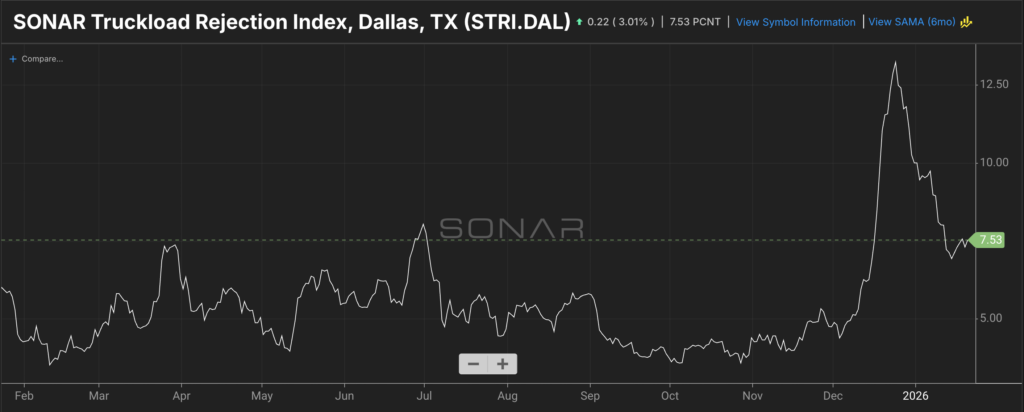
- Duration: Temperatures are expected to stay below freezing for over 72 hours.
- Precipitation: Forecasts suggest up to 0.5 inches of ice accumulation. In the trucking world, half an inch of ice is enough to bring down power lines across highways and make even “treated” roads impassable.
4. Pro-Tips for Truckers: Navigating the Texas Freeze
A. Pre-Trip Inspection (Winter Edition)
Don’t just kick the tires. If you’re heading into a Dallas freeze, check:
- Air Lines: Moisture in your lines will freeze. Use air line antifreeze/conditioner.
- Tire Treads: Ensure you have maximum grip. Check your pressure; cold air causes PSI to drop significantly.
- Fuel Levels: Never let your tanks drop below half. You might be idling for 12 hours on the shoulder of I-45 waiting for a wreck to clear.
B. Driving Tactics
- No Cruise Control: This is the golden rule. Cruise control can cause your drive wheels to spin and trigger a jackknife on icy patches.
- Increase Following Distance: On dry pavement, you need space. On ice, you need a football field. Triple your usual following distance.
- Brake Early and Lightly: If your truck has an engine brake (Jake brake), turn it off on slick roads. It can cause your drive wheels to lock up, leading to a slide.
C. The “Stay Put” Rule
There is no load worth a life or a totaled rig. If TxDOT (Texas Department of Transportation) issues a travel advisory, find a truck stop early. Spaces at the Flying J or Pilot in DFW fill up fast once the sleet starts.
5. Survival Kit: What to Have in Your Cab
If you get stranded on the side of a Texas highway, you are on your own until the ice thaws. Your “Dallas Survival Kit” should include:
- Non-perishable food & 3 days of water.
- Heavy blankets or a sub-zero sleeping bag.
- A portable power bank for your phone.
- Flashlight and road flares.
- Extra warm clothing (layers are key).
Summary for Dispatchers and Drivers
When Dallas gets iced in, the supply chain doesn’t just slow down—it breaks. The 2026 storm is shaping up to be a major disruptor for the I-35, I-20, and I-30 corridors.
Tips: Watch the “DriveTexas.org” map religiously. If the map turns red, it’s time to park it.